Family tree of chess
Who descends from whom and what each game borrowed: every game played here, by region and century, from chaturanga to Duck chess.
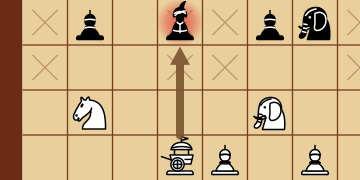 Open the family tree
The game runs in your browser and needs JavaScript.
India
- Chaturanga · 6th–7th c. · India's game of the four arms of an army, the root of the family.
- Chaturaji · ~1030 · India’s chess for four kings, once played with dice.
Persia, the Arab world and Ethiopia
- Shatranj · ~600 · Chess in Persia and the Arab world, the game of Baghdad's masters.
- Byzantine chess · ~850 · Shatranj on a round board, “the Byzantine game” of the Arabic books.
- Complete chess · 9th c. · Shatranj on ten by ten, with two dabbābas and a half-win.
- Tamerlane chess · ~1400 · Timur’s great chess: giraffes, camels and two citadels.
- Shatar · 16th c. · Mongolian chess: a bers, camels, and a mate that needs a shak.
- Senterej · 19th c. · Ethiopian chess: no turns at first, and taking the last piece only draws.
Europe
- Medieval chess · ~1000 · Shatranj in Europe, with a queen and a chequered board.
- Courier chess · ~1200 · Germany's chess on twelve files, with a bishop that slides.
- Four Seasons Chess · 1283 · Alfonso X’s chess for four: each army a season of the year.
- Grande Acedrex · 1283 · Alfonso X’s great chess: twelve squares by twelve, with animals for pieces.
- Chess · ~1475–1500 · Medieval chess with a long-range queen and bishop.
- Carrera’s chess · 1617 · Two new pieces, the champion and the centaur, on ten files.
- Duke of Rutland’s chess · by 1747 · Chess on 14 × 10 with the concubine and two crowned rooks.
- Bird’s chess · 1874 · Two more pawns, a guard and an equerry, for new openings.
Southeast Asia
- Ouk Chatrang · 12th c. · Cambodian chess, carved on Angkor's temples, makruk's near twin.
- Malay chess · by 1509 · Chess of the Malay world: the king leaps, a crowned pawn walks back.
- Makruk · by 1688 · Thai chess: a slow game of short steps, cowrie pawns and a count.
- Sittuyin · by 1800 · Burmese chess: place your army first, promote on the diagonals.
- Kar Ouk · date unknown · Cambodian ouk where the first check wins the game.
China and Korea
- Xiangqi · 8th–9th c. · China's chess, played on the points, with a river and cannons.
- Janggi · 13th c. · Korea's xiangqi: no river, four setups and the right to pass.
- Manchu chess · after 1644 · Xiangqi with one red piece that is chariot, horse and cannon.
- Banqi · 20th c. · Xiangqi’s pieces face down on half the board, taken by rank.
- Jieqi · 1980s · Xiangqi with the pieces face down, each revealed by its first move.
Japan
- Shogi · 11th c. · Japan's chess, where captured pieces come back to fight for you.
- Chu shogi · 14th c. · Japan’s middle shogi: 12 × 12, no drops, and the lion.
- Tori shogi · 1828 · Shogi of birds on 7 × 7, with drops.
- Minishogi · ~1970 · Shogi shrunk to a 5 × 5 board with six pieces a side.
- Minixiangqi · 1973 · Xiangqi shrunk to 7 × 7 points, without river, advisors or elephants.
Modern games
Other rules
- Antichess · 1870s · Chess turned upside down: lose all your pieces to win.
- Atomic chess · 1995 · Every capture explodes and clears the squares around it.
- Chess960 · 1996 · Chess with the back rank shuffled into one of 960 setups.
- Duck chess · 2016 · A rubber duck that blocks both sides, moved after every move.
- Marseillais chess · 1925 · Two moves a turn: the first can set up the second.
- Progressive chess · 1947 · One move, then two, then three: each turn one move longer.
- Friendly Chess · 2017 · Nothing is captured: pieces unite and set off chain reactions.
- Three-check · 20th century · The third check wins.
- King of the Hill · date unknown · A king that reaches the centre wins.
- Racing Kings · 1960s–70s · No pawns, no checks: a race of the kings to the far rank.
- Dunsany’s chess · 1942 · An army against 32 pawns, the army first.
- Horde · 2002 · A wall of pawns against a whole army.
- Los Alamos chess · 1956 · Chess on 6 × 6, the first game a computer played.
- Hexagonal chess · 1936 · Chess on a board of 91 hexagons, once popular in Eastern Europe.
- Alice chess · 1953 · Two boards, and every piece that moves passes through the looking-glass.
- Ultima · 1962 · Chess’ set, but every piece captures its own way.
- Raumschach · 1907 · Chess in a cube: five boards, one above the other.
- Jeson Mor · 1966 · Nine knights a side race for the centre square.
- Legan chess · 1913 · Chess’ men in opposite corners; the pawns step diagonally.
Hidden information
- Kriegspiel · 1899 · Each player sees only their own pieces; an umpire sees all.
- Fog of War · 1989 · You see only where your pieces can go; capture the king to win.
Pieces from the hand
- Bughouse · 1960s · Two boards, two teams: captured pieces go to your partner.
- Crazyhouse · 1990s · Bughouse for two: your captures come back as your own pieces.
- Hostage chess · 1997 · Captured men are held as hostages and bought back.
New pieces
- Capablanca chess · 1926 · A world champion’s answer to the draw: ten files, two new pieces.
- Janus chess · 1978 · Two januses, bishop and knight in one, on a board of 10 × 8.
- Grand chess · 1984 · A board of 10 × 10, and pawns that become only pieces already lost.
- S-chess · 2007 · Capablanca’s two pieces on the ordinary board, brought in from the hand.
- Spartan chess · 2010 · Chess’ army against the Spartans’ two kings and new pieces.
More players
- Four-handed chess · 1779–1881 · Four armies on a cross-shaped board, partners sitting opposite.
- Eight-handed chess · 1884 · Eight armies on 448 squares, two to a side: four against four.
- Four-player chess · 2017 · Four armies on the cross board, in teams or each for themselves.
- Eight-player chess · 2021 · Four-player chess with every arm doubled: eight armies, 516 squares.
- Three-player chess · 1970s · Three armies on a hexagon of three bent half-boards.
The games
Chess and variants
- Chess · Classic chess, or Chess960 with a shuffled back rank.
- Chess960 · Fischer random chess: the back rank starts in one of 960 setups.
- Antichess · Losing chess: give away all your pieces, captures are compulsory.
- Atomic chess · Every capture is an explosion that clears the pieces around it.
- Crazyhouse · Captured pieces change sides and can be dropped back onto the board.
- Hostage chess · Captured men become hostages and come back by exchange or from the airfield.
- Three-check · Chess where the third check wins, so every check counts.
- King of the Hill · Chess where a king that reaches the centre wins at once.
- Jeson Mor · Mongolia’s nine horses: take the centre and hold it for a move.
- Racing Kings · No pawns, no checks: the first king on the far rank wins.
- Horde · 36 white pawns storm a full black army.
- Dunsany’s chess · Lord Dunsany’s game of 1942: 32 pawns against a full army.
- Los Alamos chess · Chess on 6 × 6 without bishops, the first game a computer played (1956).
- Duck chess · After every move you move the duck, which blocks everyone. No check.
- Marseillais chess · Two moves a turn, with one piece or two; White starts with one.
- Progressive chess · One move, then two, then three: each turn is one move longer.
- Fog of War · You only see where your pieces can move. Capture the king to win.
- Kriegspiel · Only your own pieces in sight; an umpire judges every move.
- Alice chess · Two boards: every piece that moves passes through to the other one.
- Raumschach 3D · Chess in a 5 × 5 × 5 cube: five boards stacked, and the unicorn.
- Old Raumschach · Maack’s cube as played before 1919: five pawns above the pieces.
- Friendly Chess · Nothing is captured: pieces unite and set off chain reactions.
- Ultima · Every piece captures its own way, and the immobilizer freezes.
- Gliński’s hexagonal chess · Chess on 91 hexagons: three bishops, rooks in six directions.
- McCooey’s hexagonal chess · Hexagonal chess closer to chess: seven pawns that take diagonally.
- Shafran’s hexagonal chess · Hexagonal chess on 70 cells, with castling and pawns that step three.
- Spartan chess · Persians against Spartans: chess’ army against two kings and new pieces.
- Legan chess · The armies in opposite corners; pawns step diagonally towards the far one.
Big chess
- Complete chess · The Arabic chess of the 9th century on 10 × 10, with two dabbābas a side.
- Courier chess · Medieval Germany’s chess on a 12 × 8 board, with the courier, the man and the schleich.
- Grande Acedrex · Alfonso X’s great chess on a 12 × 12 board, with lions, giraffes and a roc.
- Tamerlane chess · Timur’s great chess on an 11 × 10 board, with giraffes, camels and citadels.
- Carrera’s chess · The first chess on ten files, from a Sicilian priest’s book of 1617.
- Duke of Rutland’s chess · Fourteen files, with the concubine and two crowned rooks a side.
- Bird’s chess · Henry Bird’s ten-file chess of 1874, with the guard and the equerry.
- Capablanca chess · Ten files and two new pieces: the archbishop and the chancellor.
- Gothic chess · Ed Trice’s setup of 2000, today called Trice’s Chess.
- Capablanca Random · Capablanca chess from one of 12,118 shuffled starts.
- Embassy chess · Grand chess’ row of pieces on a 10 × 8 board.
- Janus chess · Two januses a side, each moving as a bishop or a knight.
- Grand chess · Christian Freeling’s 10 × 10 game: pawns promote only to lost pieces.
- S-chess · Chess with a hawk and an elephant in hand, placed as the back rank leaves.
The chess family
- Chaturanga · India’s ancient chess, the root of the family: take the king to win.
- Shatranj · The medieval ancestor of chess, with a weak ferz and a jumping alfil.
- Byzantine chess · Shatranj on a round board: the rook circles, pawns never promote.
- Medieval chess · Europe’s chess before 1475: the ferz and the king may leap on their first move.
- Senterej · Ethiopian chess: no turns until the first capture, then Shatranj.
- Shatar · Mongolian chess: the bers, the camel, and a mate that needs a shak.
- Makruk · Thai chess: a slow, strategic game with a counting rule.
- Ouk Chatrang · Cambodian chess: Makruk with a leap for the king and the met.
- Sittuyin · Burmese chess: set up your pieces, then promote on the diagonals.
- Kar Ouk · Ouk Chatrang where the first check wins: guard your king.
- Malay chess · Chess of the Malay world: the king leaps, a crowned pawn walks back.
- Xiangqi · Chinese chess: a river, palaces and a cannon that jumps to capture.
- Minixiangqi · Xiangqi on 7 × 7 points: no river, no advisors, no elephants.
- Manchu chess · Red’s lone chariot moves as horse and cannon too, against a full army.
- Jieqi · Xiangqi with the pieces face down: each is revealed by its first move.
- Banqi · Xiangqi’s pieces face down on half a board: turn them up, take by rank.
- Janggi · Korean chess: no river, palace diagonals and a cannon that always jumps.
- Shogi · Japanese chess: captured pieces return to the board on your side.
- Minishogi · Shogi on a 5 × 5 board: six pieces a side, short and sharp games.
- Chu shogi · Japan’s great shogi on 12 × 12: no drops, and a lion that moves twice.
- Tori shogi · Bird shogi on 7 × 7: a phoenix, quails and swallows, with drops.
More players
- Chaturaji · India’s four-handed chess: kings can be captured, captures score.
- Four Seasons Chess · Alfonso X’s chess for four from 1283: four seasons, the last king wins.
- Three-player chess · Three armies on a hexagonal board: you against two bots.
- Four-player chess · Four armies on a cross-shaped board: in teams or all against all.
- Bughouse · Two boards, two teams: what you capture goes to your partner's hand.
- Eight-player chess · Eight armies on a board of 516 squares: all against all, in pairs or four against four.
- Verney’s four-handed chess · Verney’s game of 1881: two against two, mate both enemy kings.
- Verney’s eight-handed chess · Verney’s game for eight of 1884: four against four on 448 squares.